Lenovo AI-Driven CX Platform
Product Design
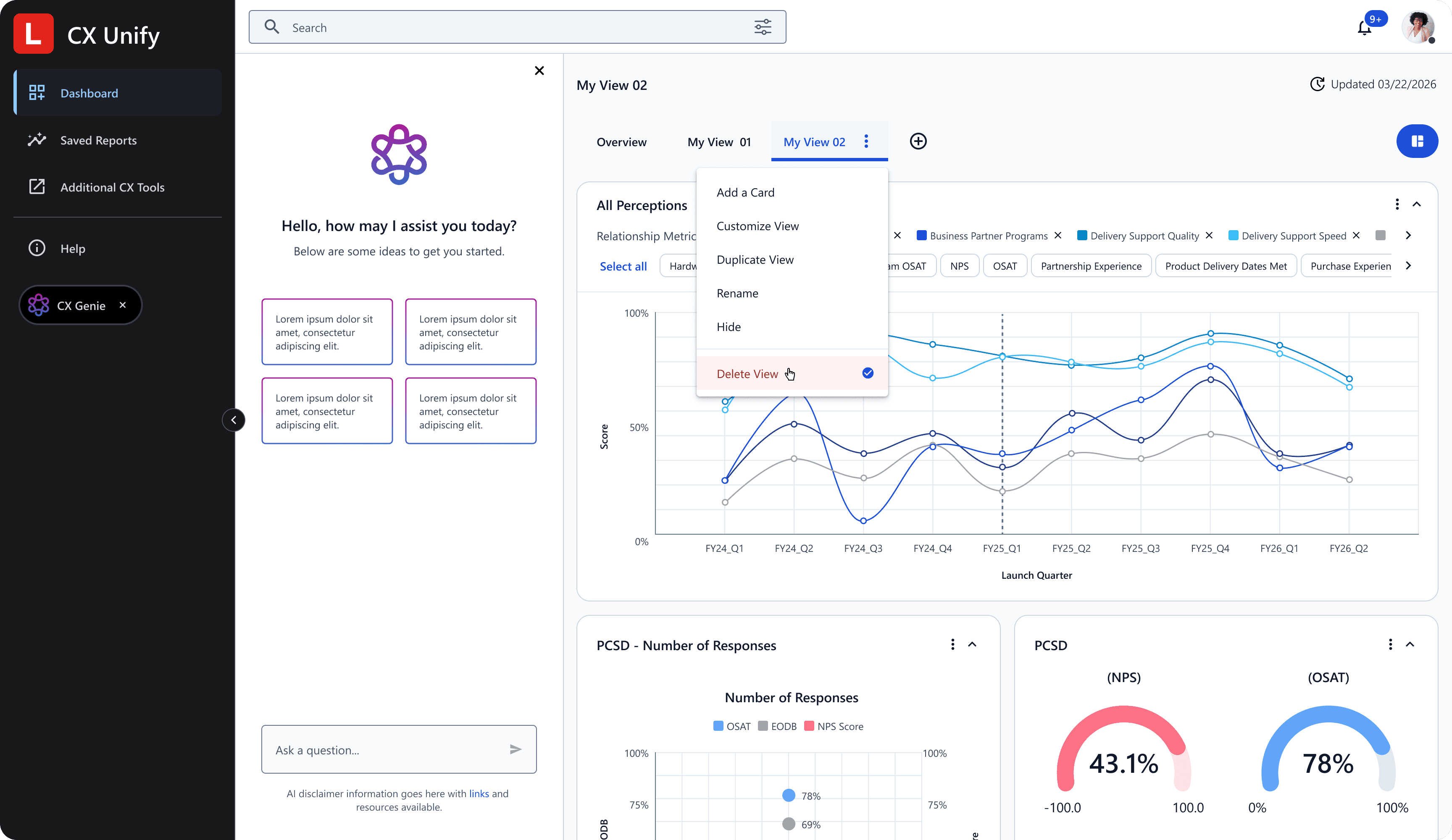
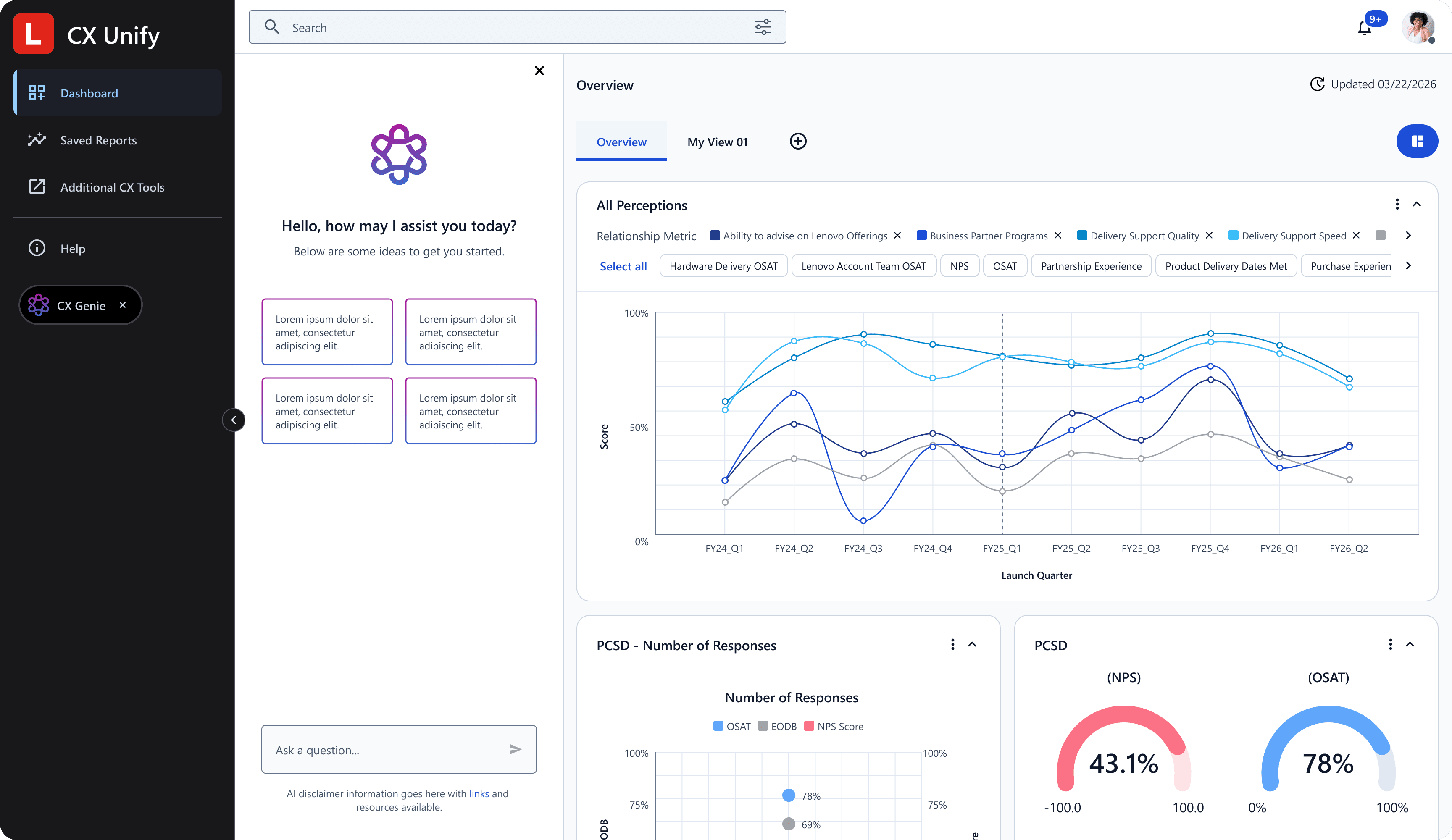
An AI-driven CX platform designed to unify fragmented internal tools into a single, customizable dashboard experience. The platform enables employees to access data and interact with an AI agent to surface insights more efficiently.
ROLE
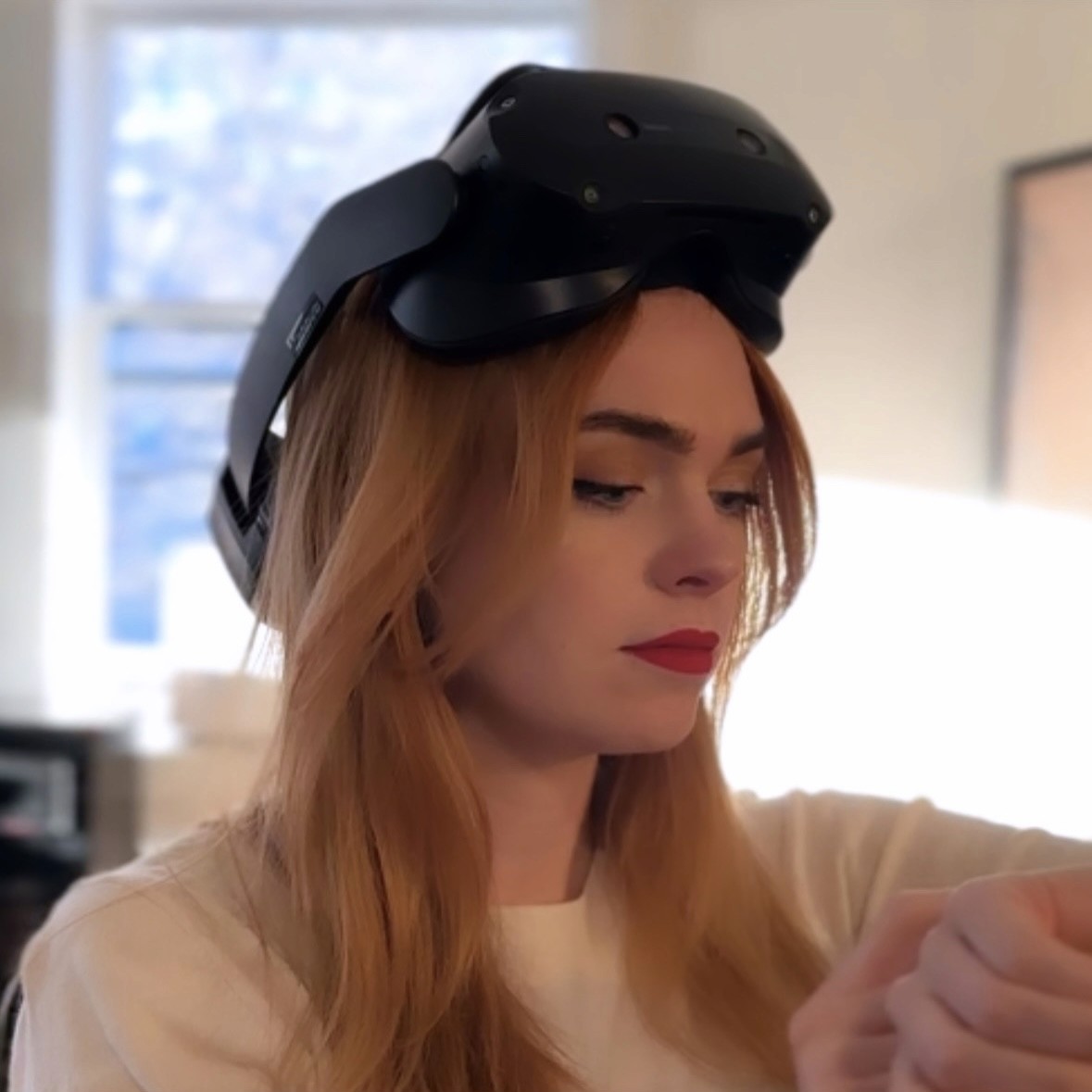
UX Visual Designer
CONTEXT
As Lenovo’s CX ecosystem grew, so did the number of internal tools supporting it. Over time, this led to a fragmented experience, with overlapping data, inconsistent interfaces, and inefficient workflows.
The CX team partnered with us to explore a unified solution — one that could consolidate data sources and introduce AI-assisted workflows to help employees navigate complex information more effectively.
My Role
I led the visual design of the platform, working at the intersection of Lenovo’s Cake Design System and new interaction patterns tailored for AI-driven experiences.
This included defining visual direction, extending existing components, and designing new interface patterns to support conversational and data-driven interactions.
Approach
We began by auditing the existing ecosystem — analyzing tools, data sources, and visual patterns to understand both overlap and inconsistencies.
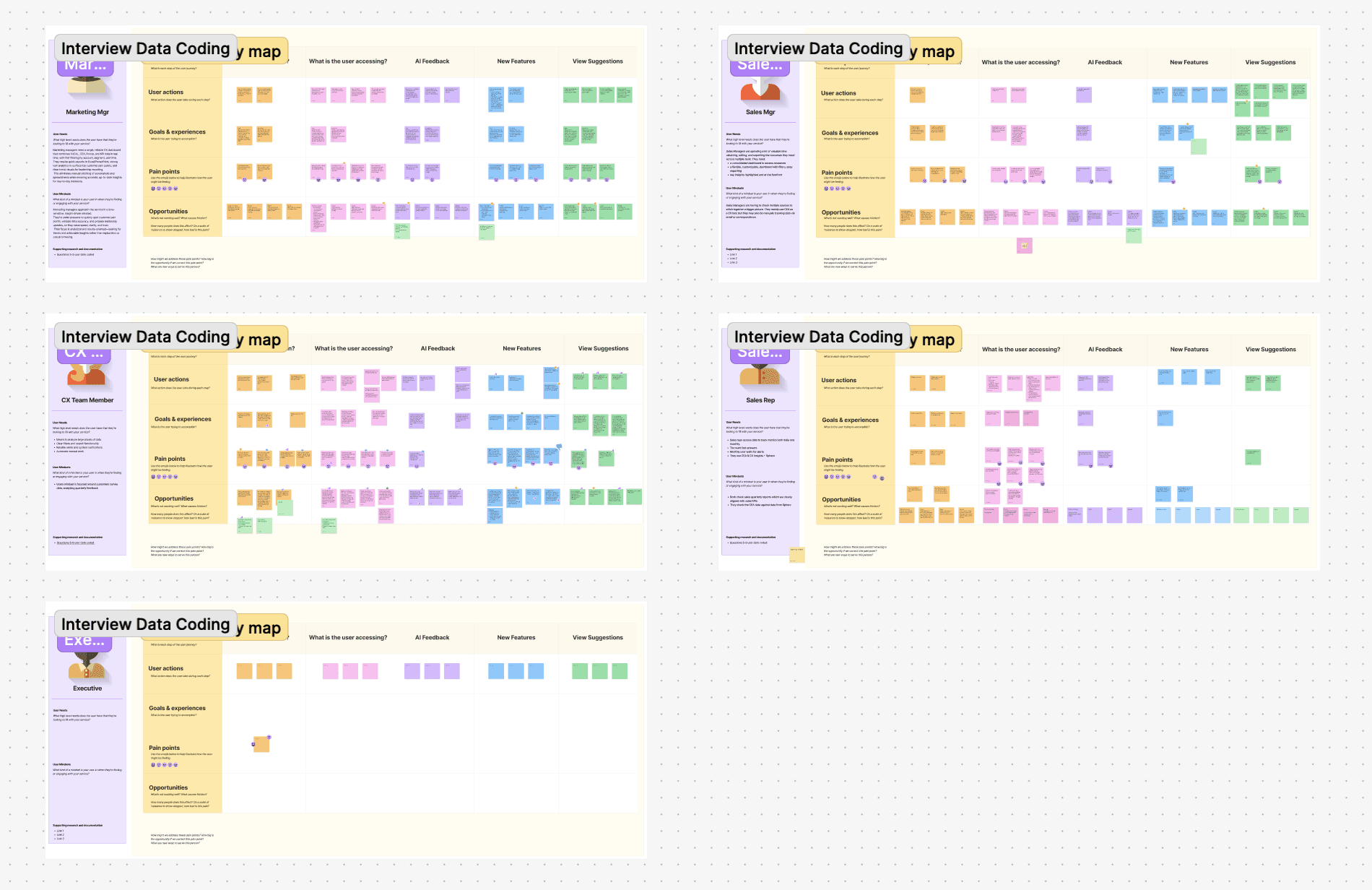
Through interviews with CX super users, we identified key pain points around navigation, data discovery, and cognitive overload. These insights informed user journeys that prioritized clarity, efficiency, and flexibility.
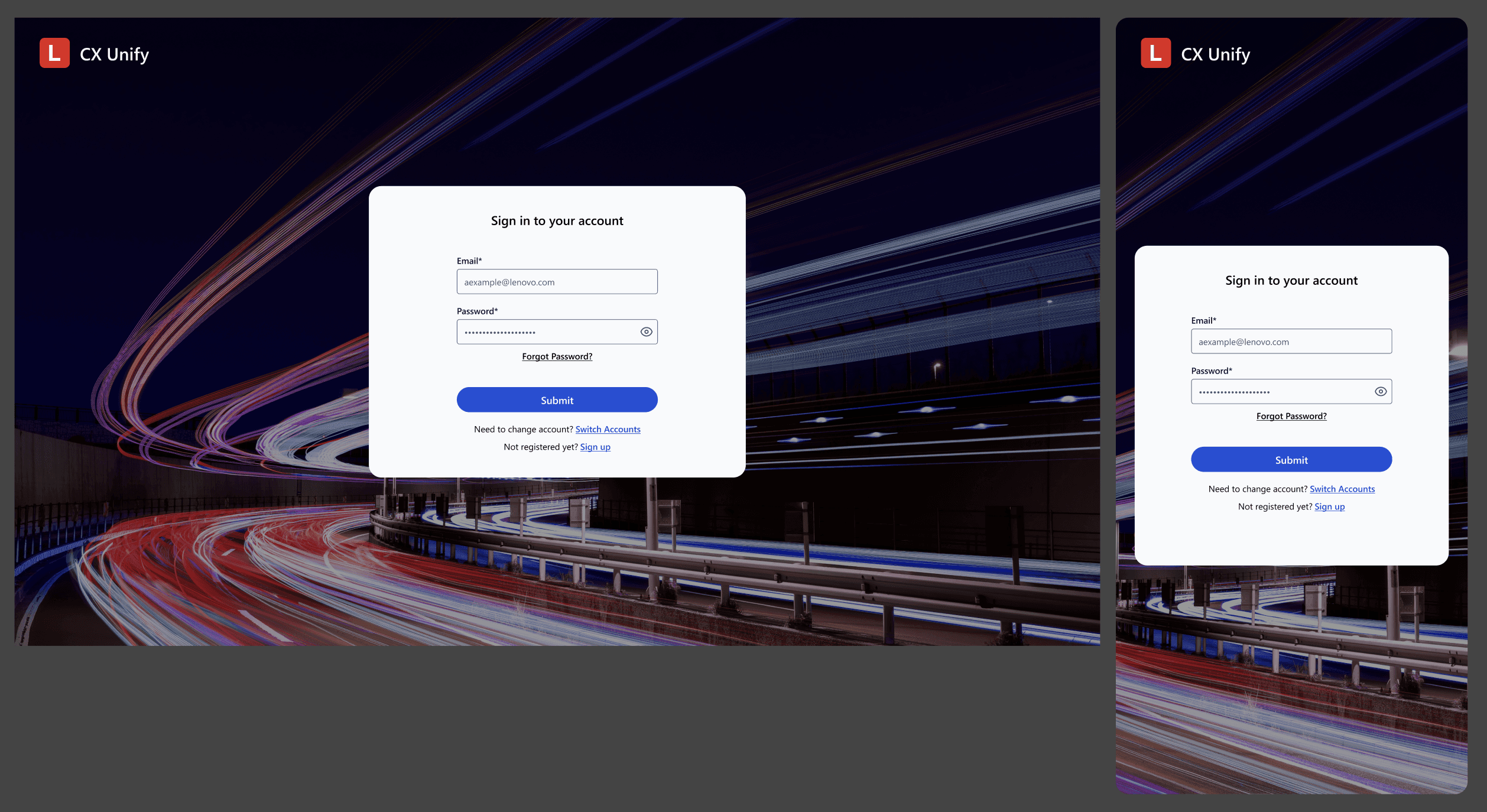
From a visual systems perspective, I focused on creating continuity across the experience. This meant aligning iconography, visual language, and interaction patterns so that the new platform felt familiar rather than introducing additional friction.
At the same time, I explored how AI could meaningfully support users — including concepts like generating dashboard cards from queries, dynamically customizing views, and surfacing relevant insights based on user intent.
Outcome
The project established a clear direction for a unified CX platform centered around usability and intelligent workflows.
We introduced a system that prioritized user experience in a space where internal tools are often overlooked, advocating for more thoughtful, human-centered design across enterprise applications.
The proposed AI-driven interactions — including customizable dashboards and agent-assisted insights — helped reframe how CX employees could engage with data, shifting from tool navigation to task-focused workflows.